Thursday, April 10

Phishing for change: Hye Rim gets hacked


"I am sorry I didn't inform you about my traveling to Africa" the email begins. It goes on to inform me that the sender is "really stranded in Nigeria because I forgot my little bag in the Taxi where my money, passport, documents and other valuable things were". After setting up the desperate situation, including a bullying Hotel Management and your friend now starving because of lack of funds, the clincher comes. "Please can you help me with a sum of $2700 to sort out my problems here?"

While everyones aware of the standard Nigerian money fraud scheme, it's rare that an entire email account can be hacked into, allowing a variation of this tactic to come from a good friend or colleague. But that's precisely what happened to Hye Rim Lee, the New Zealand based artist who's recently had a flurry of group and solo shows in New York. Strangely enough, the scam email coincides with some of Hye-Rims recent activity, the Africa trip to "empower youth to fight AIDs" is not too far off some recent charitable shows.


Phishing, baiting a victim in the hope of "catching" financial info or passports, has become increasingly sophisticated in recent years. As the internet picked up mainstream use, amateur hackers could count on web neophytes to click on dubious links or open email attachments from strangers. With a heightened awareness of security, people are treating the greater web more like the street than their bedroom - no gifts from strangers. Very open social networks like MySpace are losing kids by the thousands to more exclusive, 'safer' platforms such as FaceBook. The result? Phishers have to look like your friends, or the people you do business with, to reel users in. Last week I received a Paypal email (shown above), which I quickly learned was a phishing attack. The email address was extremely similar to the official one. The logo, the layout, and the colouring were identical to the legit version.


ASB Bank and Kiwi Bank have both been the victim of fraudsters sending similar emails to their customers. In a famous attack several years ago, phishers set up a duplicate site for a major New Zealand bank, tricking customers into revealing their username and password. The phishers left the truly devastating part to the end: after they had obtained their catch, the user was simply given an error message and directed to the legit bank website, where the login 'worked' as usual. The result? No complaints, security crackdowns, or uproar. Just a steady string of lucrative bank account numbers.

100th Post!


A short very self-congratulatory post - Window:Scene has reached it's 100 post. I started the blog just under a year ago, and have since covered a gamut of topics, from fashion to architecture, videogames to videoart, as well as local events like gallery openings, film screenings, and sound gigs. If you've enjoyed the blog, drop me a comment.

Thursday, April 3

Play it! Make it! workshop media now online


Documentation from our recent Play it! Make it! exhibition is now online. This includes photos from the workshop as well as a playable version of the completed game - a bizaare mix of collaged couples, jumping fish, and cackling spirits. We've had a number of requests to run the workshop again, if you're interested just leave a comment.

Window call for proposals open


If you haven't seen the posters around the city, Window's formal call for proposals is now open. You've got until next Friday to send us your ideas, either through email or by dropping it into the office. I'd particularly be interested in seeing projects that span our unique two spaces, On Site and Online, or create a dialogue between them.

Wednesday, April 2

In Pictures: Newcall gallery launch


Newcall gallery launched officially last night with the opening of Martyn Reynolds and Marnie Slater. "No Letting Go, No Holding Back" featured a readymade Mercedes A class banner by Reynolds, which seemed to continue his habit of acquiring large objects from stores and manufacturers (Reynolds previous show at Window featured a treadmill, road bike, and growing lamp from an array of sponsors). Slater's offering consisted of a dual channel project, an awkward series of bodily positions and poses mimicked by either performer. Amateur in an endearing way, the lo-res video balanced the commercial slickness of the Mercedes piece.


Behind the scenes, Newcall is an interesting exercise in reappropriating a space. Originally built at least two decades ago, the open air foyer and ground floors were designed to be a commercial mall, but failed almost instantly. The surrounding area of Newton is strongly industrial and has been for a number of years, and the combination of lack of foot traffic and parking meant the death knell for the original intent. Instead a handful of small businesses catering to office workers fill the void: a post office, a small cafe, a print shop. With it's conversion, Newcall joins the ranks of others such as the Jensen Gallery in Newmarket. Leaving the central city for a bigger, more industrial space, the gallery is quite obviously a converted parking garage, maintaining the hard lines, concrete, and ramps from it's past life.


Newcall continues in the same fashion, rejecting some aspects of it's past while embracing others. The fluorescent panel lighting and dark tinted glass stay. The carpet is (quite literally) ripped out. Walls are created over broken walls, ceiling panels removed for art hanging, vinyl glazing placed over windows blurs studio interiors while letting light in. The main entrance, a large double door affair, is rejected completely. Instead the deck is opened up and a set of stairs direct from a service entrance becomes the entry point.

Sunday, March 23

Back to basics: escaping the cyber mall


E-commerce, once the buzzword of online marketing, is so cheap now that any potential merchant can add credit card services to their page for a minimal monthly fee. For access to a bigger marketplace, stores can list on mammoth sites like eBay, Etsy, CD Baby, or Amazon.com. Locally traffic to online auction powerhouse TradeMe accounts for 50% of all web traffic in New Zealand. But to do business with Rene Spudvilas it's very simple. Email him.


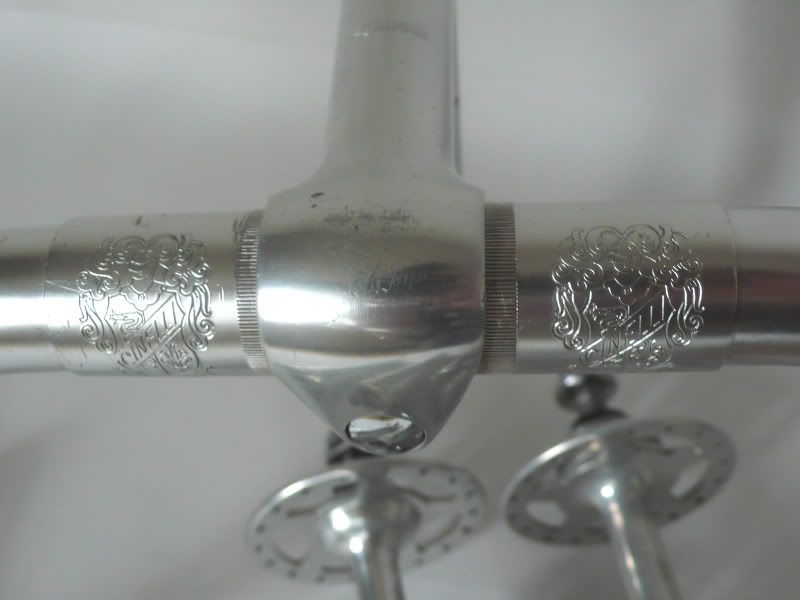
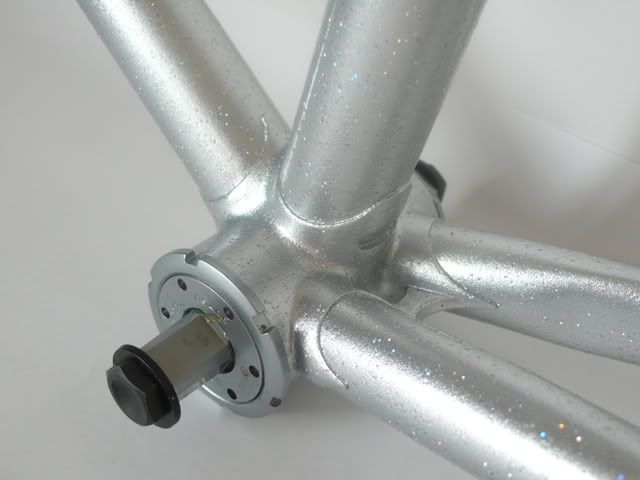
Actually Rene, who deals in rare Japanese bicycle frames, initially began selling on eBay, with immediate success. "I only started after selling my own frame on USA eBay, which was the first Keirin frame I bought after moving to Japan. That frame was the 3rd most watched item in the world for sports category, and I got so many emails asking if I could find more for potential buyers." But he quickly got turned off, "After that I bought a few more frames to sell, but wanted to avoid eBay, because I did not like their fees." Avoiding the generic experience, poor customer service, and anonymous feel of large online marketplaces, he set out for himself. Rene realised how unique his product and his clientèle was, and decided to capitalise on it, "even if I only had a small blog, fans would find it, simply because no other search results would come up on google, if anyone typed *keirin* or *njs frame* etc..."


Spudvilas continues the DIY aesthetic throughout all aspects of his business. He takes photographs of the products himself, with close-ups of what his customers are really interested in. Descriptions forsake corporate speak, personally endorsing products or using more fan-boy terminology. Some products he uses himself "on my daily ride", others are "super sexy old school". Suppliers are really just friends with hand-crafted goods that he can vouch for. His latest product line is from Kishiguchi Yo, "one of my first friends in Japan, who grew up around a lot of pro keirin riders."


Local record label CMR continues in this same vein. Specialising in "Limited edition lathe-cut records, vinyl records and CDs", the site consists of a long list of albums. Reviews are long, eloquent affairs lifted from other sound magazines and distributors worldwide: The Wire, Tofaki, Incursion, Earpiece. The catalogue is rigorously updated and posted in plain text to alternative audio culture mailing lists such as New Zealand's AF (Audio Foundation) list.


Dusty Klein's Cadence Clothing fashion line is a one-man operation that he intends to keep that way. Quality is handmade and meticulous, but also allows for chance and "variants between pieces." Escaping the managerial and ethical dilemmas of offshore clothing factories, production is done in "small, detail-oriented runs." A relatively new company, Klein has intentionally limited his expansion, "believing that growth is not a necessary means of success." Promotion is organic, Klein photographing or filming riders that wear his apparel, and posting these on YouTube or Flickr photosets with titles like "Seattle respect".

Friday, March 21

Cartography as controversy


Julian Oliver sends word about his recent keynote at the Inclusiva Net conference:

From the earliest world maps to Google Earth, cartography has been a vital interface to the world. It guides our perceptions of what the world is and steers our actions in it. As our knowledge about the world has changed, so have maps with it (or so we like to think).

In this lecture Julian shows a darker side of map-making, covering various reality-distorting effects innate to the graphic language of cartography and how they can be easily exploited for gain.

Thursday, March 20

One night videogame show coming to Window


Next Friday at Window we'll be presenting a special one-night only videogame show called Play it! Make it!. The first section consists of a handpicked selection of innovative, unusual, and experimental games from Bill Viola, Toshio Iwai, and others, and will allow you to experience first- hand some important game works.

Game designer Jeff Nusz will be running a lighning fast, low-tech workshop that comprises the Make it! section on the same evening. Arming small teams with a bevy of musical instruments, craft supplies and a computer, Jeff will assist participants in designing and building a simple videogame in just 2 hours.

Friday 28 March from 7 - 10 pm, at Window

Tuesday, March 18

Hack this code: Te Tuhi software goes open source


Douglas Bagnall writes to let us know that he's made his Te Tuhi Video Game system software open source under the GPL (General Public) license. We blogged about the show a few months ago here at Window:Scene, where visitors to Te Tuhi could draw pictures that were analysed by the software and converted to videogames via a set of rules. Opening the code to the community allows these rules to be changed and shifted, but you'll need some technical savvy. With his usual deadpan humour, Bagnall goes straight from step 4, "Try ./tetuhi path/to/some/image.jpg. If everything is working, a window should pop up with a game in it.", to step 5, "But it probably isn't working, so at this point you should subscribe to the mailing list and ask there."

Hye Rim Lee at Max Lang


For those waltzing around the Chelsea gallery scene in the next few weeks, Hye Rim sends word about an opening of new work on March 13th at Max Lang gallery, 229 10th Ave, New York.

Thursday, March 6

Play it. Make it. Sell it.


Are you a real fan of Beirut, or did you just jump on the bandwagon? Lee Byron's Listening History visualisation reveals the truth, mining hundreds of listening hours logged on social music site LastFM for the answers. In a series of large scale posters that are both intuitive as data and beautiful aesthetically, artists are represented by sinuous waves, "cooler colors represent artists who have been listened to for a long period of time while warmer colors represent artists who are more recent in the user's listening habits."


Sell out so your work reaches millions of consumers, or stay the starving artist in relatively obscurity? Kevin Kelly proposes an alternate solution. "A creator, such as an artist, musician, photographer, craftsperson, performer, animator, designer, videomaker, or author - in other words, anyone producing works of art - needs to acquire only 1,000 True Fans to make a living." If a little idealistic, Kellys approach seems doable, and all the more so because of recent technology. Need to print your own book? Go to Lulu.com. Don't have a record label? Monetize it on AmieStreet.com. Need to stay in touch with those 1000 fans? MySpace, RSS feeds, blogs, and Flickr are here to help.


An approach Nine Inch Nails frontman Trent Reznor knows all too well. After following in the footsteps of Radiohead's 'pay what you want' scheme with side project Saul Williams, Reznor went even further with his own project last week, offering a stepwise model of cost for NIN's latest album. "Fans bought 2,500 copies of the ultradeluxe edition of the new album, Ghosts I-IV, offered at the same time as free tracks and other music packages that begin as low as $5. The most expensive option sold out in three days, and activity on the website crashed its servers."


Fuyuko Akiyoshi sends word of a videogame she's just produced. Zoo Escape stars you as the brave panda who must help the animals to escape. Reach a certain level and you'll need to fight the zoo keeper himself, an evil Ronald McDonald.


Want to make your own videogame? On March 28th you'll have a chance. Over at Window, we're staging a major experimental videogame exhibition, culminating in a "Play It! Make It!" evening in the Window space. You'll have a chance to play 5 or 6 seminal games, including works such as Bill Viola's surreal meditative Night Journey, the UN sponsored political simulation Ayiti, and ground breaking interactive narrative work, Facade. Talented game designer Jeff Nusz from Custom Logic will be coming up from Christchurch to run the Make it section. Arming small teams with a bevy of musical instruments, craft supplies and one computer, their aim will be to crank out a videogame in under 2 hours. That bizaare whale game with coloured pencil art and a casiotone/rap soundtrack you've always dreamt of playing? Bring it to life on March 28th.

Tuesday, February 26

In Pictures: Tending Networks Symposium


Click the large image to go to the next image, or use the page navigation along the bottom. For the full size version of any image, click Link.

Johnny Chang tonight at Window from 6 - 7


Johnny Chang will be performing a short selection of pieces from his London and Los Angeles compositions in conjunction with a field recording work via radios by Sonya Lacey tonight at Window from 6 - 7pm.

The event kicks off a three-day stint for Johnny at Window, as he'll be conducting less formal performances from 3 - 5pm on Wednesday and Thursday, activating the space with a range of sounds, from delicate amplified paper and dried vegetation to pure tones and field recordings.

Tonight, Tuesday, February 26, 6 - 7pm
Window, General Library Foyer, 5 Alfred Street, Auckland

Tuesday, February 19

Garden city goes digital with conference


Christchurch will play host to a spectrum of digital artists, musicians, programmers, and designers this weekend for Tending Networks, the yearly symposium for the Aotearoa Digital Arts network. Highlights include a keynote and new work presented by Young-Hae Chang Heavy Industries, the Seoul-based masters of flash who first came to light with their cheeky, minimal work "Artist’s Statement No. 45,730,944: The Perfect Artistic Web Site" shown above.

Stella Brennan will be discussing her most recent work, "South Pacific", a poetic micro-narrative overlaid over satellite imagery which I've previously reviewed.


Eddie Clemens, now based in Christchurch on residency, will be talking about his Pinball Lanterns installation in the Auckland Central Library space. Douglas Bagnall will show us how to "take the tedious work of experimentation, abstraction and learning out of the process of making art" via his myriad machine creations, which range from A Film Making Robot to Te-Tuhi Videogame machine and Cloud Classifier. Finally, cyber-performance group Avatar Body Collision will most likely focus on UpStage, working between countries, and the nuances of the virtual theatre.

Full Symposium programme here.

Seance for Nam June Paik in Christchurch this weekend


“I use technology in order to hate it more properly” Nam June Paik

As part of the ADA Symposium this weekend, Daniel Agnihotri-Clarke presents Séance for Nam June Paik, a screening and performance event featuring Disasteradio, Naomi Lamb, Emil McAvoy & Damian Stewart, Bronwyn Smith, Nathan Thompson, Dell McLeod, Andrew Clifford, Morgan Barnard, and Dan Untitled. Widely regarded as the father of video art, "digital artworks by Aotearoa/New Zealanders will be presented in a new project: to channel (and negotiate with) the spirit of the late Korean artist’s practice".

Saturday 23 February 2008
8pm, SOFA Gallery Basement, Christchurch Arts Centre.
$15/10 or Free Entry with Tending Networks: ADA Symposium Registration

Reciprocity work from Emil McAvoy and Damian Stewart, and Disasteradio.

Monday, February 11

Prada's Trembled Blossoms fails to fully bloom


From ShowStudio comes word of "Trembled Blossoms", an animated short film for Prada. Directed by James Lima, the film depicts a "cyber woman's journey through a magical, illustrated forest", accumulating clothing from the fashion icon as she goes. And while "Blossoms" is an important shift from glossy photo spreads to moving image for fashion, what's more interesting are the cues taken from online worlds, videogames, and new media.


The film's protagonist, an androgynous avatar birthed into the world by a rose, is heavily influenced by manga and anime - featuring the long legs, large eyes, and faerie complexion favoured by Japanese artists. Beginning nude, but fully grown, the animation starts in the same way as notable online words like Second Life. The main item of clothing, a red and blue check sheath dress, isn't put on, it's transferred. Another avatar appears to bestow the clothing, virally spreading the distinctive check texture from herself to our heroine. A host of traits are picked up from online massive multiplayer environments like World of Warcraft: a pixie companion that circles the avatar, a camera that tracks movement, even glitter and glow effects that look downsampled and artificial.


Starting life as a series of stunning storyboards from James Jean, with beautiful finished watercolours from Jared Purrington, "Blossoms" mood boards are pieces of art by themselves. Elegant lines wrap around explosions of colour, pencil drawings of organic flower/high heel hybrids are delicately articulated. Unfortunately, the final work fails to keep it's cyber and organic influences in tension. Caught between pixel and paint, avatar and actor, "Blossoms" plunges into the Uncanny Valley.


Roboticist Masahiro Mori coined the term in the 70s to describe robots "with appearance and motion between a 'barely-human' and 'fully human'. We love the clumsy hulking metal of C-3PIO, but a more realistic woman cyborg with fake hair, skin and unblinking eyes repulses us. While "Blossoms" doesn't cause this degree of emotion, it fails to work because of it's straddling. Instead of an obviously artificial video-game walk cycle, or a motion captured female walk, the film uses a mediocre between - a badly animated slink that's more strange than sexy. Likewise, the avatars facial expressions are more than the real-time triggered response of a videogame, but they're also far less than human. The result is an experience that is beautiful but cold, stunning but not completely compelling.

Powersound at Te Tuhi


Te Tuhi's foyer space reverberated with drones, clattering sticks, and plucked tones on Friday as it played host to a sound and dance performance for James McCarthy's Powersound+. A "sonic wall drawing", Powersound takes the form of a bridge of wires at various tensions, with pickups for amplification. Joining him was members from Auckland's experimental music community Vitamin S, including: Kristian Larsen, Zoe Drayton, Paul Buckton, and Andrew McMillan. The group successfully flowed through a number of phases, from Drew's initial harplike 'activation' of the instrument, through harsh guitar scraping, Dada-like play, and a rich harmonic tone on the verge of feedback to close.


Kristian throws sticks at James in some sort of fishing-baseball hybrid.


Zoe provides noise and soundscapes via a laptop.


James sets up a made instrument of wooden posts at various lengths.

Thursday, February 7

New media work shows traffic, but not it's impact


As well as recycling code as a way to teach programming, Steph Thirion recently finished Cascade on Wheels, a data vis project attempting to translate abstract traffic stats into a more meaningful, compelling interactive. Beautifully realised in Processing, Cascade extrudes upwards, creating something akin to a spatial bar graph over Madrid - the higher the wall, the more traffic on that street. Responsive and navigable, the user is able to pan, zoom, and explore this new environment of data easily. The problem is, Cascade stops there, failing to make any statement about how, for instance, the 100,000 vehicles per day on El Prado street impacts residents, the environment, and the urban fabric.


Thirion (and the rest of the team) seemed to realise this, and came up with a second vis based on the same data, Traffix Mixer. A sound toy, where "emotion was given prominence over direct readability", Mixer does provide a nice complement to the more strictly infographic Cascade. But unfortunately, the innovative, slick interface compromises the power of the work. " Ah, i forgot how pleasant it sounds... nice to hear it again.", is one comment on the video blog. The sound of a speeding car coming up behind you - as any pedestrian or cyclist can attest- is always unnerving and ominous. Mixers sound, while aggressive, is too abstracted from its subject matter, sounding more like a track from a laptop/glitch artist.


Traffic expands like a virus. The amount of vehicles will always expand to the amount of roadway available. Its effects are also viral and ever expanding. In a landmark study in 1981, Dr. Donald Appleyard demonstrated a direct correlation between the number of friends people have on a street, and the amount of cars travelling on a given street. Even more interestingly, when asked to define their "home area", residents on Appleyard's "Low Traffic" road circled the whole street: their house, the front yards, the footpaths, and even their friends houses. With growing traffic comes growing impact, and a growing retreat. Children on the street stop playing. Adults on the footpath stop conversations. Hanging out in front yards ceases, decks stop being used, and finally in extreme situations, the front room of the house is unused, permeated with traffic noise, horns, and pollution. Traffic Mixer and Cascade on Wheels, while stunningly executed, fail to convey the impact of their subject - either quantitatively or qualitatively.

Tuesday, February 5

Monolake/Robert Henke 2008


(Editor's note: from guest contributor Melody Watson)
Almost exactly four years after his last memorable performance in Auckland, Robert Henke (otherwise known as Monolake) graces our New Zealand shores once again.

Those of you who went to that 2003 gig will know that it was one to remember, one that people still talk about even now. This year’s performance promises to be no different.

Monolake has been an integral part of the minimal techno scene in Berlin since the early 1990’s and had releases on the groundbreaking label “Chain Reaction” before starting to release music on his on label “ Imbalance Computer Music”


Monolake describes his music thus: “I create music people can dance to, music people want to experience also with their bodies, massive rhythmical structures, temporary sonic architecture with carefully choosen textures, shimmering details, constantly breathing and pulsating objects in time. …Music in which is nothing is static and which wants to exist as a state rather then a story, music which is the result of an intense occupation with detail and which still leaves enough room for interpretation. Music which improves if played loud over giant speaker stacks. Those works are released under the project name Monolake and usually labelled techno, minimal, electro or dub.” He has performed as Monolake a number of times at various prestigious festivals such as Mutek in Montreal (www.mutek.ca) and Transmediale (www.transmediale.de).


Robert has also been involved with a very interesting collaboration with various producers over the world. This is called “Atlantic Waves” and it comprises Robert jamming in real-time with such people as Deadbeat (aka Scott Monteith) and Torsten Proefrock who is associated with the Basic Channel label. He has performed this in such places as the Tate modern and the Centre Pompidou in Paris. I was lucky enough to catch this when I was in Berlin, with Robert jamming with Deadbeat in New York. It sounded really great, and you could also see what was happening due to the interface being projected.

Yet another project (this Robert Henke is a busy boy!) revolves around the use of buddha machines. Here’s what online music magazine Gridface said about Layering Buddha: “Here the lovable FM3 Buddha Machine is his source. The result is a gorgeous ambient album of echoes and crescendos. At times the pieces are soothing (“Layer 001”), other times they are tense and immense (“Layer 002”). The incredible heft of these sounds is a result of Henke’s recording process. Henke used a state-of-the-art A/D converter to record information up to 48 kHz, allowing him to pitch the recordings down to reveal previously inaudible data.”

Robert describes his Layering Buddha performance as “music that needs attention and focus, that slowly builds up intricate and fragile structures, morphing timbres constructed of millions of microscopic sonic particles, cathedrals of filtered noises, dynamic and dramatic processes that grab the listener and throws them into a new state, or music that is almost invisible, floating around like air, music that grows when performed live using multiple channels of audio“. Layering Buddha was awarded an Honorary Mention in the Digital Music category at the 2007 Prix Ars Electronica competition.


Catch Robert Henke perform his Layering Buddha piece in a six channel surround sound environment on the 26th of February at 10/12 Customs St. He will be joined by Rosy Parlane (who releases on Touch), Nigel Wright (who releases on CMR ) and Rose. The performance starts at 8pm and costs $20 ($15 for AF members)

You can also catch Robert performing as Monolake at Coherent the Saturday before (the 23rd). He will be joined by local DJ’s Miles Kuen, Melody and Darin King as well as Wilberforce who will be playing a live dubstep set. This event will start at 10pm and will cost $20 on the door.

Friday, February 1

Guilt or pleasure? Infographics convert from one to another


We Make Money Not Art today briefly mentioned two projects from infographics specialist Michael Mandiberg I've taken a closer look at, Oil Standard and Real Costs, both plugins for Mozillas Firefox web browser. Oil Standard converts US currency amounts into their worth in barrels of crude, a simple premise with it's strength lying in the connectedness of the internet. Running online and using RSS feeds, prices are converted in real-time, rising and falling with the world markets. They're also personalised - the concept becomes much more concrete when it appears over an iPod you're buying online or your own credit card transactions.


Real Costs operates in the same way, albeit on a list of very limited travel websites such as AA.com, JetBlue, and Orbitz. Translating jet miles to kg of CO2 directly on the page, that trip from LA to NYC loses some of it's glamour. The plugin does go further than literal guilt tripping however, providing a range of alternatives like public transport, carbon offsets, and carpools.


But is it all a little too earnestly green? Perhaps. Mandiberg hopes the user might shift "from passive consumer to engaged citizen." With the lack of public transport in the US and the large distances between cities, RL might just have the opposite affect - causing apathy and a sense of helplessness in users. After all, who's wants to spend a few days and nights in a Greyhound bus to make the trek across country? Oil Standard seems simpler, more sinister, and - with the addition of live news feeds from Rigzone.com - much more real. Viewed as an art project, the latter is successful precisely because it doesn't prescribe. Instead it causes a vague but definite malaise in the user, and leaves them to work out any concrete actions or lifestyle changes.